Comparing zoning options for your ducted air conditioning
Discover the right balance of comfort and efficiency for your home layout.

Understanding Ducted Air Conditioning Zoning
Zoning divides your home into independently controlled sections. This enhances personal comfort while boosting energy efficiency by not conditioning unused rooms.
As a critical part of home electrification, switching from gas to a zoned ducted system allows you to accurately manage air volume and maintain consistent temperatures year-round using renewable energy.
Homeowners typically choose between three tiers of control based on their home layout, such as managing the distinct thermal needs of a double-storey house versus a single-storey open plan.
Choosing the right setup for your home
Selecting the right level of zoning depends largely on your home’s layout. For example, a multi-storey house has significantly different thermal requirements than a single-storey, open-plan home. Homes with large windows or glass doors can also develop bigger temperature swings between rooms, making targeted zoning even more valuable.
1. No Zoning
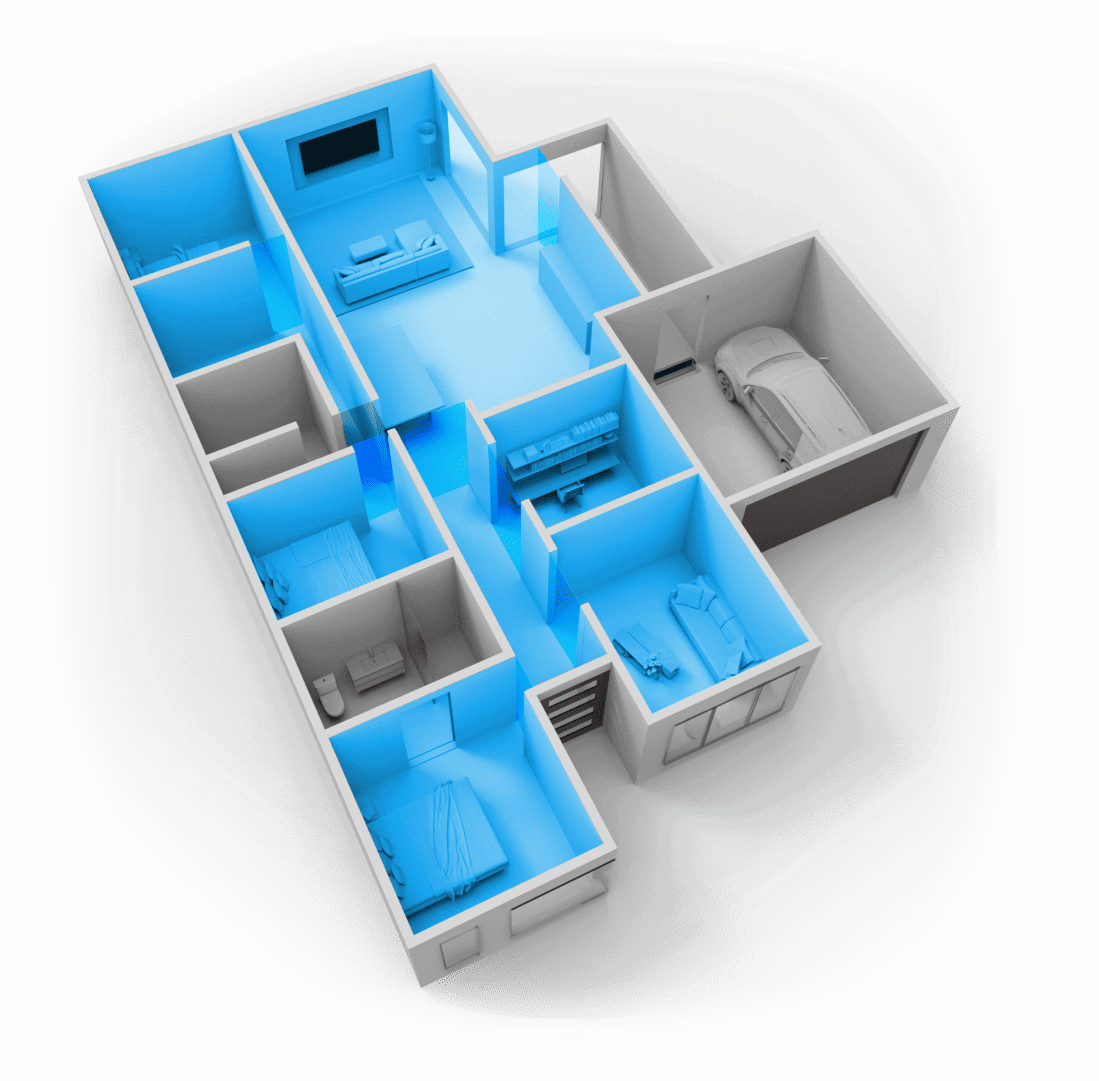
Without zoning, the ducted system treats the entire home as one large zone controlled by a single central thermostat. Every outlet receives the same air volume simultaneously. This is cost-effective but potentially inefficient for larger properties where some rooms remain empty. The system runs until the central thermostat area reaches the set temperature, regardless of hot or cold spots in outlying rooms.
2. Simple Zoning
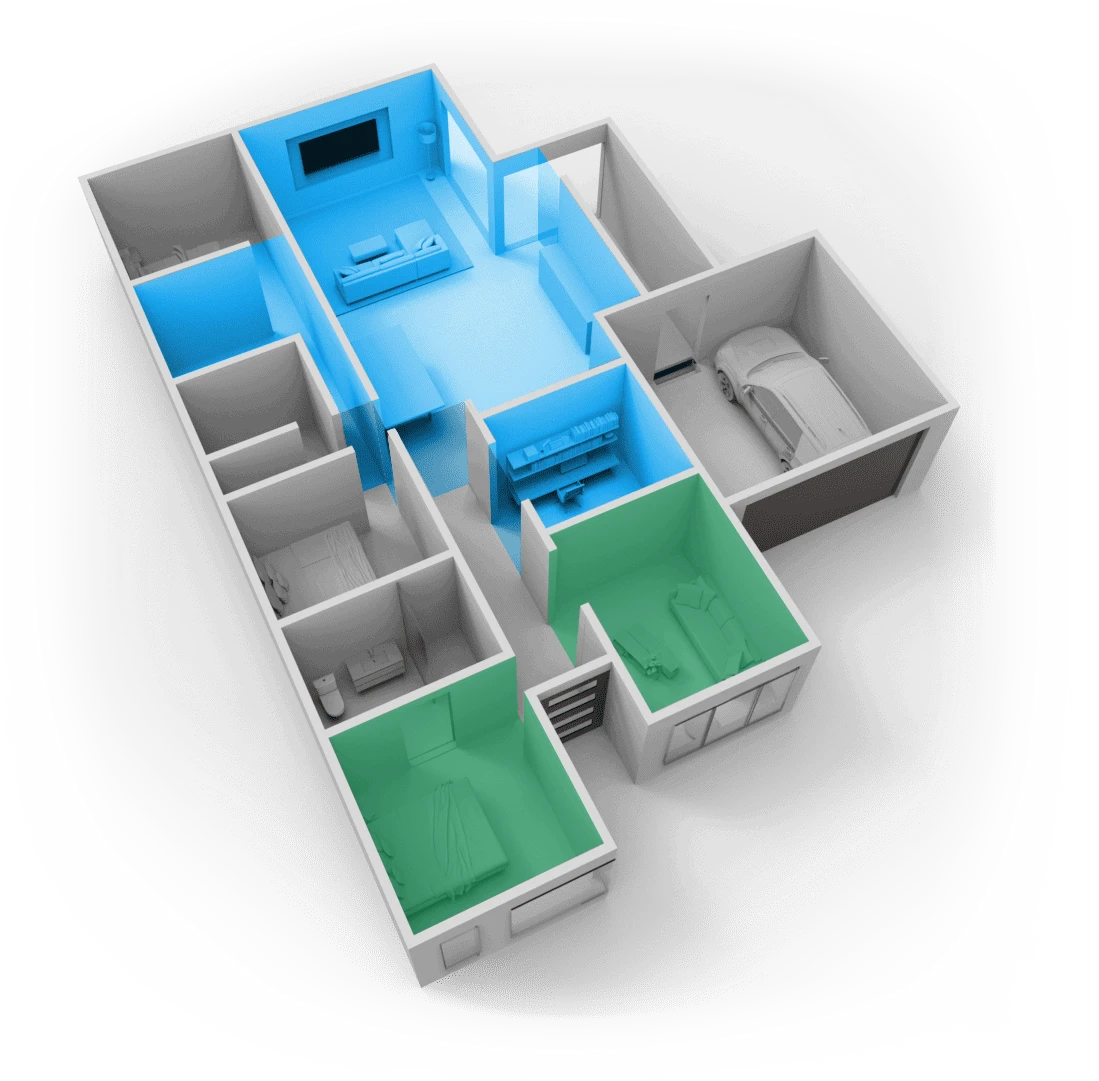
Simple zoning allows you to group rooms into sections that can be toggled on or off via the wall controller. On most systems, including the ActronAir Aires, a master zone (typically the living area) must remain open to maintain the minimum airflow needed to protect the compressor. These units can only scale down to around 40% of their airflow capacity, so the master zone acts as a safety buffer. More advanced systems like the ActronAir Advance can scale down much further, reducing the need for a permanently open zone and giving you greater flexibility over which areas you condition.
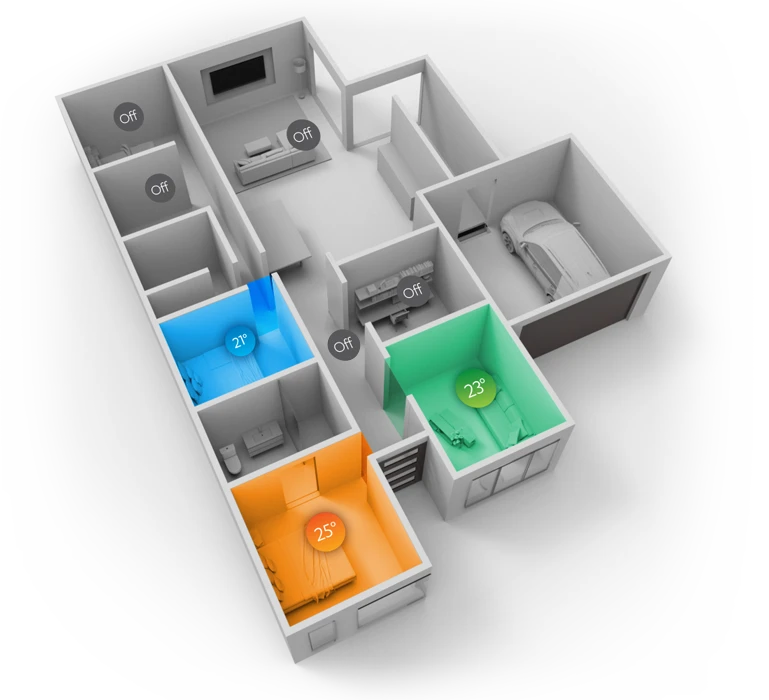
3. Temperature Controlled Zoning
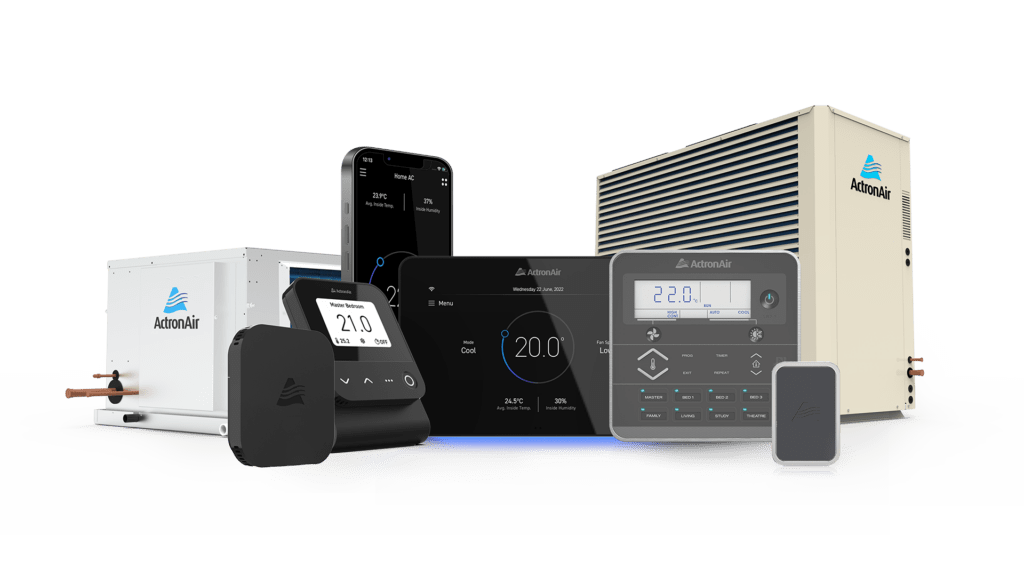
Available with the ActronAir Advance range, premium temperature-controlled zoning provides individual control for every room using localised sensors and motorised zone barrels. This system modulates air volume precisely to maintain room-specific temperatures. It is ideal for double-storey homes where heat rises. It requires advanced compressors that can scale output down to 20% to efficiently condition small areas.
The Benefits of First-party Control
With first-party control, the zoning technology and the air conditioner are built by the same manufacturer, so every component speaks the same language. ActronAir’s integrated systems are a good example; the controller, sensors, dampers and compressor all operate as a single system rather than separate pieces bolted together.
This avoids the compatibility issues that can arise with third-party zoning controllers, where mismatched hardware and software struggle to communicate reliably. It also means one warranty covers everything from the sensors to the compressor, with no finger-pointing between brands if something goes wrong.